
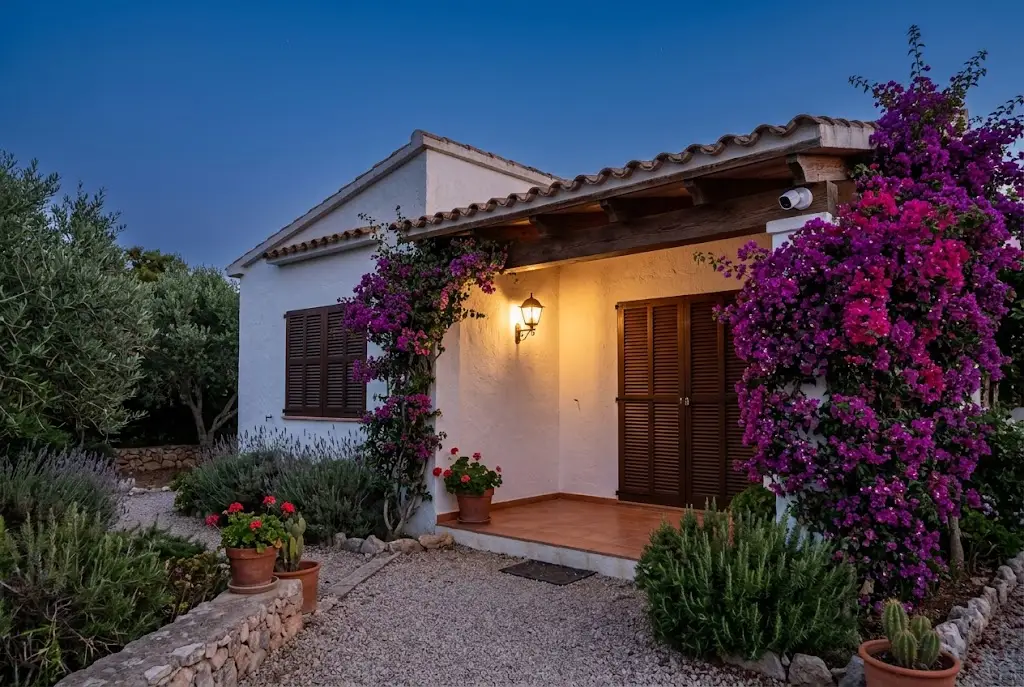
Thousands of families go through the same ritual on the last weekend of summer: sheets put away, fridge half empty, shutters down, stopcock off, one last walk round the rooms “just in case”… and the click of the door. The beach house or the house in the village is left on its own, and with it comes a nagging worry that lasts until Easter: for nine months, nobody will know what's going on inside.
Home automation turns that sentence on its head. A closed-up house can tell you on your phone if someone has got in, if there's water where there shouldn't be, if the power has gone off or if the temperature has dropped further than is sensible — and do it with no monthly fees and without depending on a fibre connection that often doesn't reach that far. This is the guide to closing up the house in September with something better than “just in case”: alerts.
A house left on its own for nine months
What makes a second home vulnerable isn't the lock: it's the calendar. In a home you live in, a small problem is discovered within hours — you step in the puddle under the sink, you notice the tripped breaker when you get in. In a closed-up house, that same problem gets to work on its own for weeks: the drip becomes a stain, the stain becomes the neighbour's ceiling, the defrosted freezer becomes a memory you can smell from the stairs. The difference between a scare and a disaster is almost never the problem itself; it's how long it takes someone to find out.
Then there's the signal the house itself gives off. Six months with the shutters down at the same height, without a single light on at dusk, put up a sign that's very easy to read from the street: nobody's here, and nobody's coming. Asking the next-door neighbour to “keep an eye on it” helps, but the neighbour isn't around at four in the morning, and can't see what's happening in the room with the water heater.
What the house tells you from a hundred kilometres away
A well-designed smart home system turns that silent house into one that keeps you informed. These are the four alerts that really change your winter:
If someone gets in. Door and window sensors, motion detectors and cameras: when something is triggered, the alert reaches your phone within seconds, with the photo or clip so you can see straight away whether it's serious, while inside the siren sounds and the lights snap on — which throws an intruder far more than a beep does. The footage is recorded locally, inside the house itself, not on anybody's server. It's the same security system with no monthly fees that we install in the homes people live in all year, from €900 as a one-off payment — a detail that matters twice as much in a house you only use now and then, because nobody wants to pay twelve monthly fees for two months of use.
If water appears where it shouldn't. Year after year, water damage is the most common home insurance claim in Spain according to UNESPA (in Spanish), and an empty house is its favourite setting: nobody steps in the puddle. A leak sensor under the water heater, the sink and in the bathroom raises the alarm at the first drop, and a motorised stopcock can shut off the water by itself without waiting for you to see it. How they work, where to put them and what their limits are is all in our guide to water leak sensors.
If the power goes off. Power cuts are a winter classic on residential developments, and their silent victim is the full freezer. With the router running off a small battery, the house tells you about the cut as it happens; and even without one, the system restarts by itself when the power comes back and lets you know — you'll know there was a cut and how long it lasted, which is exactly what decides whether the food can be saved. A smart plug with energy monitoring on the fridge adds the fine-grained confirmation: if it's still drawing power, it's still cooling. What else keeps working during a cut, and how the house gets ready for the power coming back, is explained in what happens to your smart home in a power cut.
If it gets too cold — or too damp. A temperature and humidity sensor in each room costs little and keeps watch on the two slow enemies of a closed-up house: frost that bursts pipes inland and damp that breeds mould on the coast. With climate control built into the system (from €700), the response can be automatic: if the temperature drops below the threshold, the heating comes on at minimum to protect the pipework; if humidity shoots up, the dehumidifier kicks in. With nobody inside, the house looks after itself.
Internet where fibre doesn't reach
The objection comes up on almost every visit: “but there's no internet there”. You don't need to sign up for fibre for an empty house: a 4G router with a data-only SIM on a basic tariff is more than enough — the alerts are tiny messages and video only travels when you open the camera.
But the important point is a different one, and it's what sets a well-designed system apart: the brain of the house isn't on the internet, it's in the house. Our systems run on your local network — the alarm keeps watch, routines run and cameras record inside the home, whether there's a connection or not. The SIM is just the channel the house uses to talk to you: if the mobile network drops out one afternoon, the protection doesn't drop with it; only the alert is delayed. And since nothing depends on a manufacturer's cloud, there's no camera or app subscription to pay every month for a house you use eight weeks a year.
Out of season, don't let it look closed up
The second layer is to stop putting up that “nobody's here” sign. A presence routine switches lights on at dusk at times that vary from day to day — tied to the actual sunset, which isn't the same in October as in February — alternates between rooms and, if the shutters are motorised, moves one now and then. From the street, the house looks lived in. The full technique, including what works and what no longer fools anyone, is in our guide to simulating presence at home while you're on holiday — in a second home it's simply applied the other way round: not for two weeks in August, but for the remaining nine months.
It's worth being clear: simulation doesn't replace the alarm, it complements it. One discourages people from trying; the other acts if someone tries anyway.
What about an alarm receiving centre? The honest answer
Whenever we compare alarms with and without monthly fees we argue the same thing, and an isolated house is exactly the case where it needs saying carefully. Spain's Private Security Law 5/2014 (in Spanish) reserves passing an alarm activation on to the police for approved alarm receiving centres: with a system that has no monthly fees, the person who calls is the person who receives the alert — you, dialling 112 like any other witness, with the advantage of watching the camera while you dial.
If your second home is two hours away, with no neighbours nearby and nobody who can pop round to check, having a receiving centre keep watch for you has real value — and some insurance policies require it in writing, so read yours before you decide. For every other case — a development with neighbours, a relative twenty minutes away, your phone always on you — an alert with video in your hand arrives before any verification protocol, and doesn't cost a monthly fee for the nine months when nothing happens.
The checklist for closing it up with peace of mind
Closing up in September, with or without a system, happens once a year — so it's best done with a list:
- Turn off the main stopcock and leave leak sensors wherever there's still water inside: the water heater, the bathroom, the kitchen. The water already in the pipes counts too.
- Water heater off and standby cut. Whatever little has to stay plugged in — fridge, router — is best on a smart plug with energy monitoring: visible consumption means the device is alive.
- Decide about the fridge: emptied with the door left ajar, or full with the power-cut alert set up. What doesn't work is full and flying blind.
- Set up the presence routine — lights at dusk with some variation, the odd shutter if it's motorised — and arm the alarm in empty-house mode.
- Set the winter thresholds: an alert (or minimum heating) if the temperature drops below about 5 °C, an alert if humidity stays sky-high.
- Check the outdoor cameras: they should cover your entrances and your plot, not the street or your neighbour — data protection law is clear about that, and you don't need it anyway.
- The final test, from the car: with your phone on mobile data — off the house Wi-Fi — open the app, look at a camera and trigger an alert. If it works from the front door, it'll work from Barcelona.
Opening it up at Easter without a day of roughing it
The same system that keeps watch over the winter spares you the worst part of going back: arriving at a freezing house and spending the first day waiting for it to become habitable. The day before, from your sofa at home, you switch the heating on remotely; when you park, the app confirms what you've known since October — no leaks, no alarm activations, temperature rising. Walking into a warm house that's kept you posted all along is the other half of all this, and the pleasant one.
Common questions
What if the house doesn't have a fixed internet connection?
That's the most common situation, and it has a simple solution: a 4G router with a data-only SIM on a basic tariff that costs a few euros a month. The system uses hardly any data — alerts are tiny messages and video only travels when you're watching it. And there's a reassuring detail: the system doesn't live on the internet, it lives in the house. Automations, the siren and recording all work on the local network even if the connection drops; the SIM is just the channel the house uses to tell you what's going on.
What happens if the power goes off while the house is empty?
The sensors run on batteries that last for years, and the system's control panel has a backup battery, so a power cut doesn't switch the alarm off. If the router is also on a small battery — a home UPS — the house has time to tell you about the cut as it happens; and even if the cut is long and drains everything, as soon as the power comes back the system starts up on its own and you get an alert that it's back. For a full freezer, that pair of alerts is the difference between throwing the food out in time and discovering it in December.
The house is two hours from Barcelona. Can you still do the installation?
Tell us where it is and we'll look into it: the installation takes a day and the travel is reflected in the proposal, with no surprises. Configuration and ongoing support are done remotely — in fact, we've fully automated a flat in Bilbao working at a distance — so the house doesn't need us nearby to be well looked after.
Is it worth it for a house we use eight weeks a year?
The maths works the opposite way to what you'd expect: the less you use the house, the harder the system works, because its job is precisely to watch over it while you're away. And the no-fees model matters twice as much here: it makes no sense to pay twelve monthly fees for a house you use for two months. You pay for the equipment once — from €900, with installation and configuration included — and the leak, temperature and power-cut sensors are built into the same system, not separate devices each with its own app.
In short
Closing up your second home in September will still feel a little like saying goodbye, but it doesn't have to involve any uncertainty. With door, window and motion sensors, a leak detector under the water heater, a thermometer with some judgement, a presence routine and a data SIM, the house is no longer silent: it tells you what's happening as it happens, acts on its own when something is urgent, and welcomes you back warm at Easter. Everything owned outright, with no monthly fees, running locally — and we guarantee our installation and configuration for 5 years. The house is going to spend the winter alone either way; the difference is whether it tells you, or you walk in and find out.