
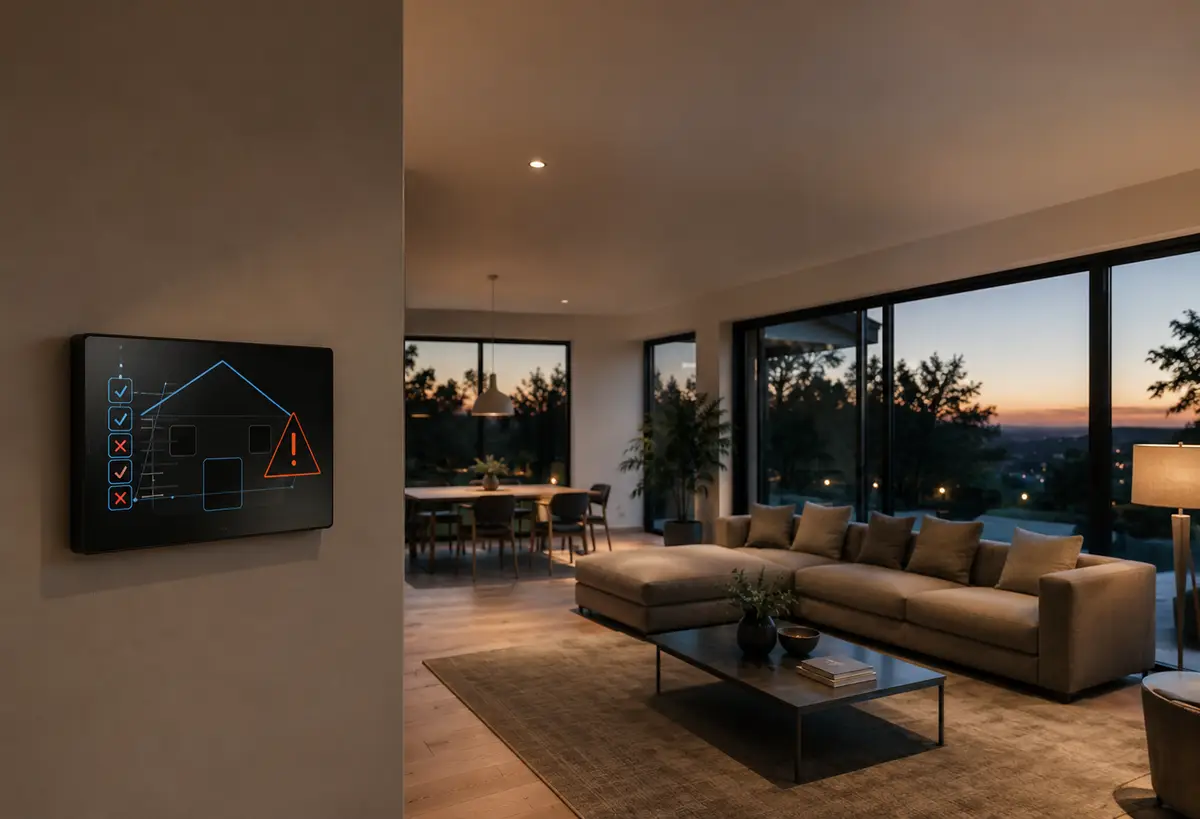
Installing home automation looks simple: you choose a few devices, connect them to an app and start automating. But as the system grows, many users discover that some of their early decisions affect performance, security and what the system is like to use.
Here we go through the most common mistakes people make when installing home automation and, above all, how to avoid them from the outset, so your home or business has a foundation that's reliable, easy to live with and ready to grow.
1. Not planning the system
One of the most common mistakes is installing standalone devices without a clear strategy. This usually leads to incompatibilities between devices, brands or protocols, as well as a poor user experience: several apps, scattered controls and automations that aren't much use.
The solution is simple: design an overall plan from the start. It's worth thinking about what you want to control now, what each room really needs and what you'll be able to add later without redoing the whole system.
2. Mixing too many brands
Not all devices are compatible with each other. Mixing lots of brands without a clear rationale can leave the installation unstable, hard to maintain or limited when the time comes to expand it.
Ideally, go for a unified ecosystem or get professional advice to choose devices that work properly together within a single installation. Variety can be a good thing, but only when there's a clear architecture behind it.
3. Neglecting the Wi-Fi network
A poor connection causes constant problems: devices that don't respond, automations that run late or systems that become unstable. In wireless home automation, the network isn't a minor technical detail; it's an essential part of the project.
Before installing home automation, it's worth checking your network infrastructure. In many cases we recommend upgrading the router or the network configuration, using good-quality repeaters or installing a mesh network if there are areas with poor coverage.
4. Not thinking about the future
Many systems work well at first, but can't grow when the needs of the home or business change. What seems enough today may fall short when you want to add climate control, security, automated blinds, energy management or new scenes.
That's why it's best to install open, scalable solutions. Just as you change over time, your home can change with you.
5. Ignoring security
A badly configured smart home can be vulnerable. Convenience should never come before security, especially when it comes to entry points, cameras, locks, alarms or connected home networks.
In a well-designed home automation installation, we always aim for strong, properly managed passwords, networks protected with the right configuration and local control wherever possible, reducing dependence on the cloud.
6. Automating too much, or too little
Balance is key. Automating everything indiscriminately can end up being a nuisance, because the system starts making decisions that don't fit real life. But doing too little can also mean the installation doesn't deliver enough value.
What matters is automating the things that genuinely improve your day-to-day life, based on your needs and your family's. That's why whole-home projects and designs are key to identifying which functions can really help you.
7. Not bringing in professionals
A DIY installation can be useful for getting started, trying out ideas or automating simple things. In complete projects, however, it usually falls short, especially when security, integration between systems, network stability and future growth come into play.
There are plenty of tools available today, but working with a professional team like 2SmartHome guarantees you support before, during and after the project, always with an approach designed around real-world use and future expansion.
Conclusion
Home automation works best when it's thoughtfully designed from the start. Planning, choosing the right devices, looking after the network, securing the installation and thinking ahead make the difference between a collection of gadgets and a truly smart home.
If you're thinking of automating your home or business, at 2SmartHome we can help you define a reliable, scalable solution tailored to the way you live or work.